A QR Print Approval Sheet: Test the Final Sign, Not Just the Export
A reproducible approval workflow for QR signs, with a failure log, scan matrix and a clear rule for stopping a bad print run.
Practical guides and worked examples on creating, printing and using QR codes, from the structure of the code to size, colour, security and tracking.
A reproducible approval workflow for QR signs, with a failure log, scan matrix and a clear rule for stopping a bad print run.
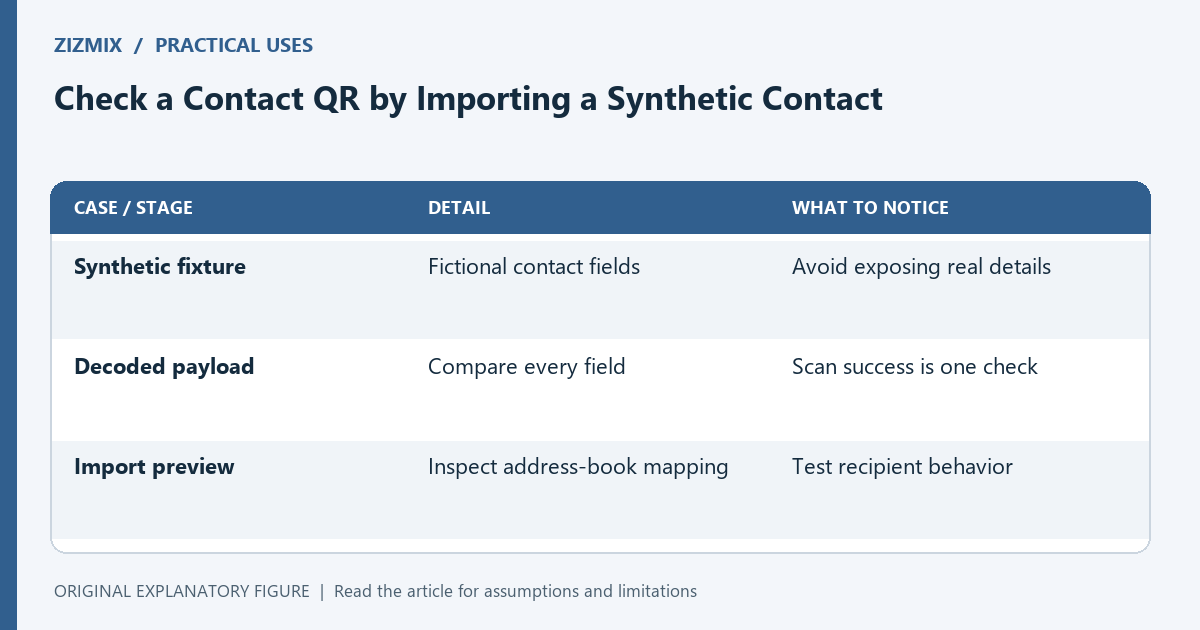
Verify field mapping, line breaks, and recipient behavior before publishing real contact details in a QR asset.
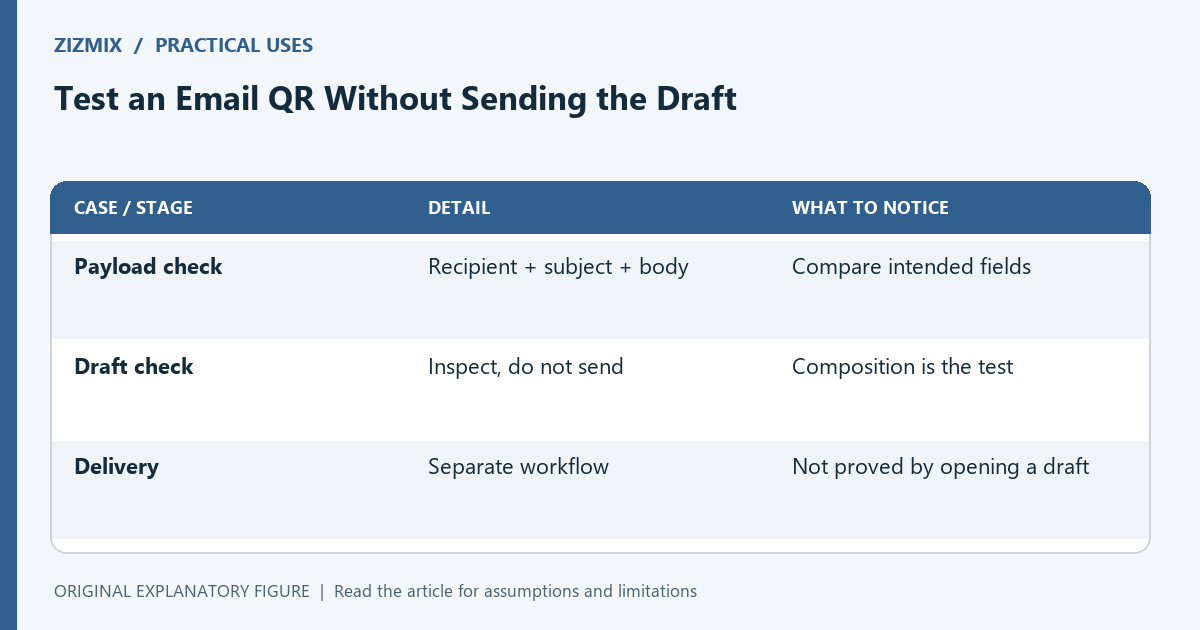
Read guide →Inspect recipient, subject, and body after scanning, then separate email composition from successful delivery.
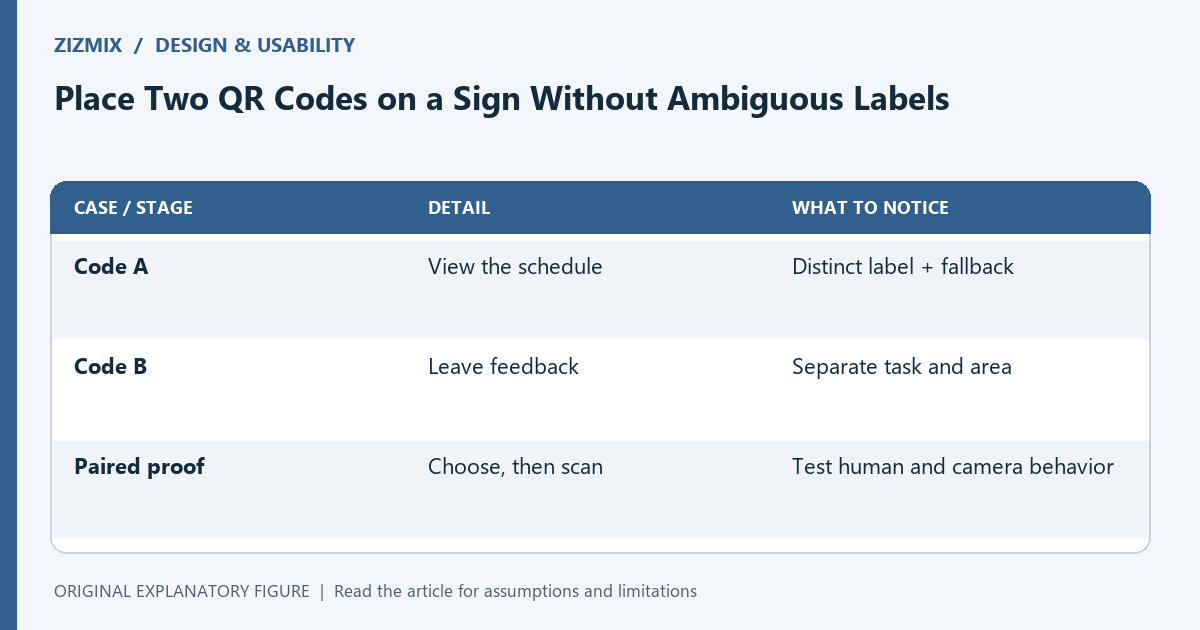
Read guide →Give each code a distinct task, protected space, and fallback so a reader can choose the intended destination.
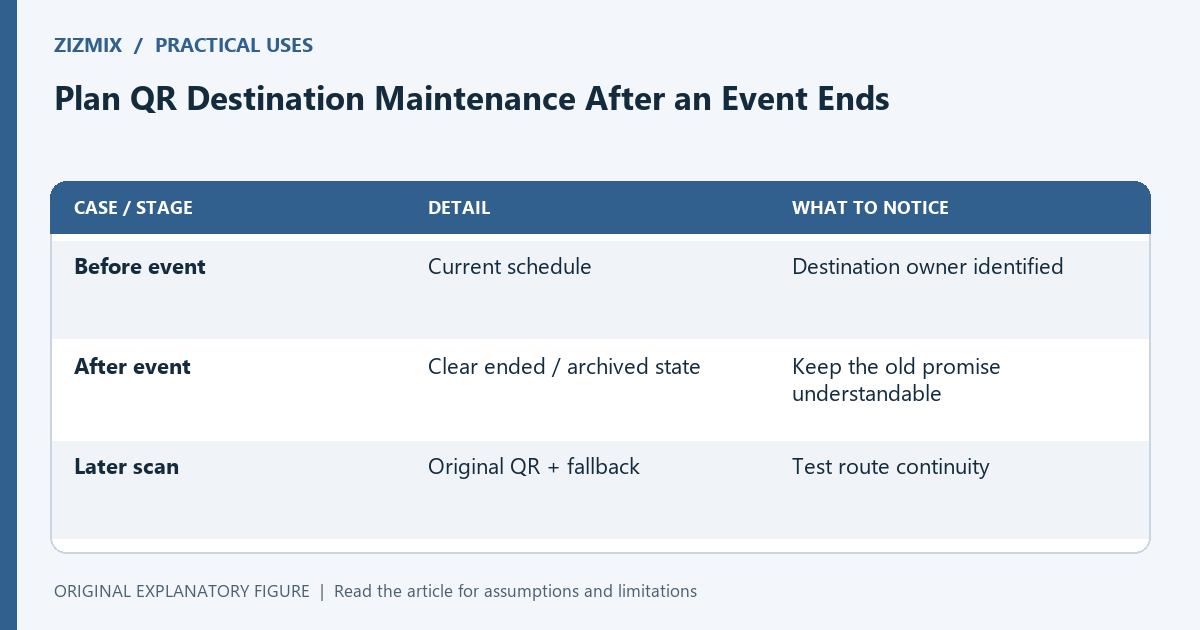
Read guide →Keep old printed links understandable by assigning a destination owner, an end-of-event state, and a review date.
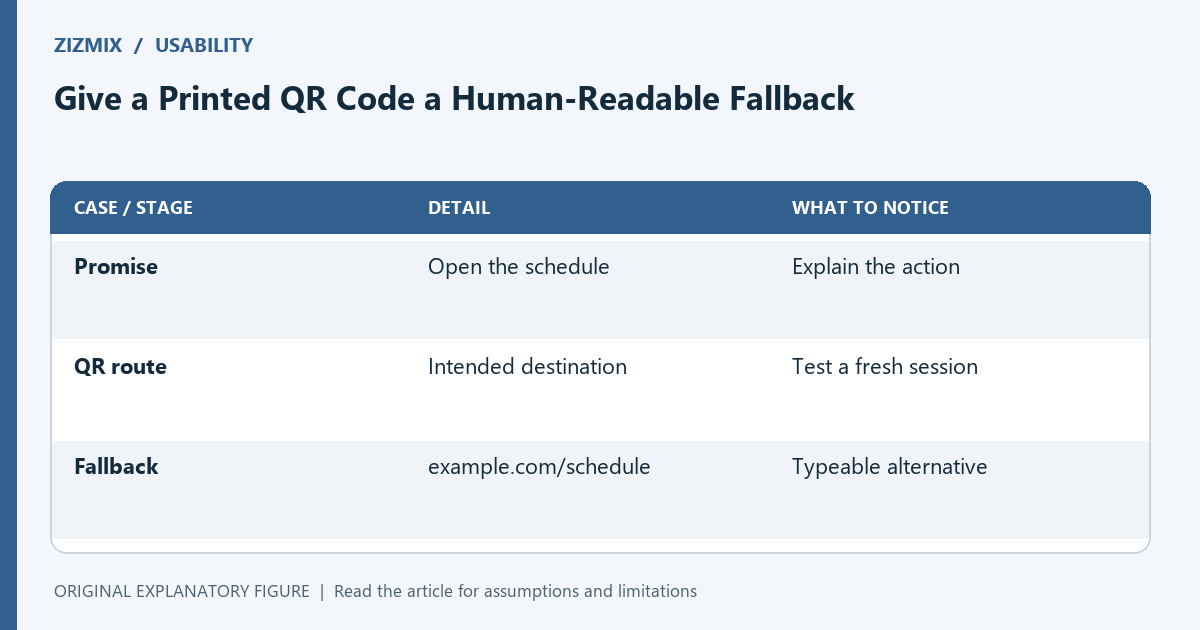
Read guide →Pair a scan destination with a short visible address and a clear promise so people can proceed without a successful scan.
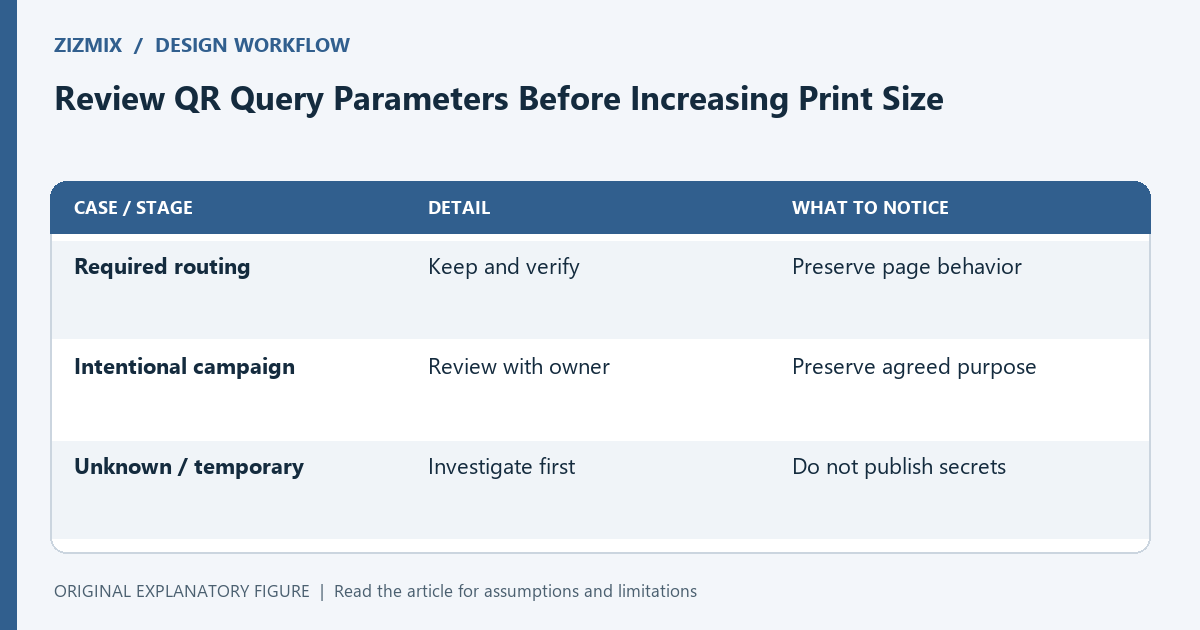
Read guide →Inspect unnecessary URL parameters, preserve required behavior, and compare newly generated symbols before changing the layout.
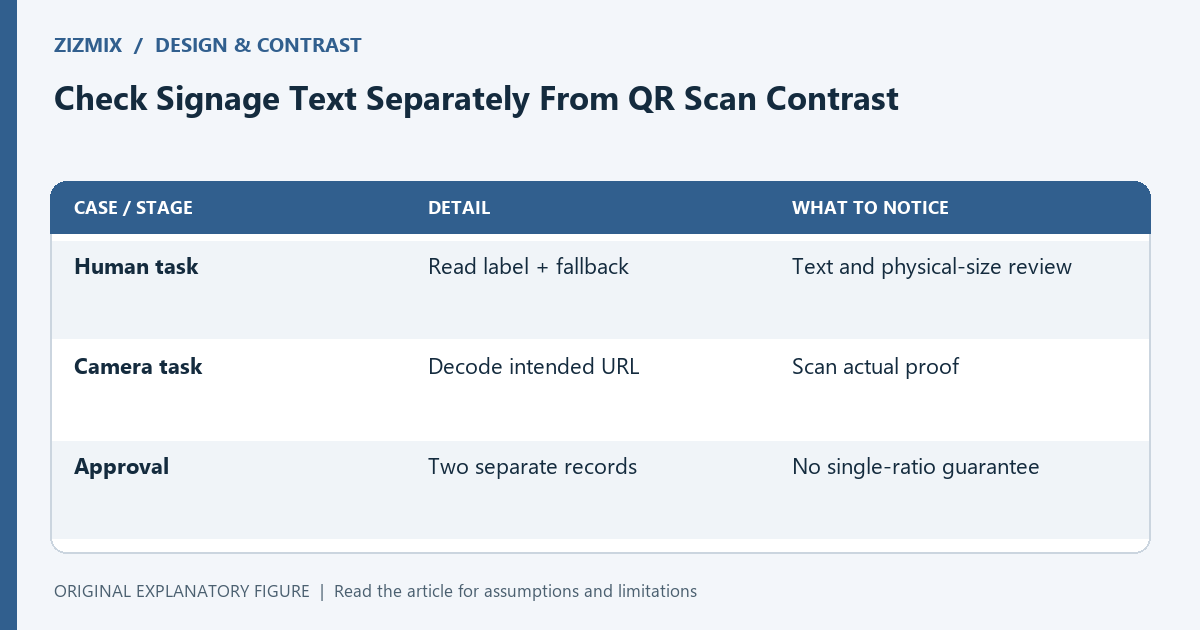
Read guide →Review the human-readable label and the QR symbol as different visual elements with different acceptance checks.
Read guide →A QR code is a grid of squares with a very specific anatomy. Here is what each part does, and how a phone turns it into a link in half a second.
Read the guide →Why a damaged QR code can still scan, what the four levels recover, and how to choose between a simpler code and a tougher one.
Read the guide →A static code is permanent and free. A dynamic code can be edited and tracked, but it depends on someone else's server. How to decide.
Read the guide →From 17 bytes to 7,089 digits: the exact limits for every encoding mode and error-correction level, plus what they mean for URLs, Wi-Fi codes and contact cards.
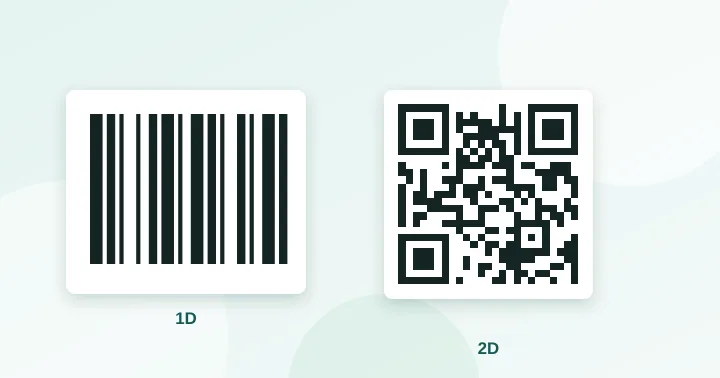
Read the guide →Both are machine-readable patterns, but one stores a product number and the other can carry a web address. Capacities, readers and where each one belongs.
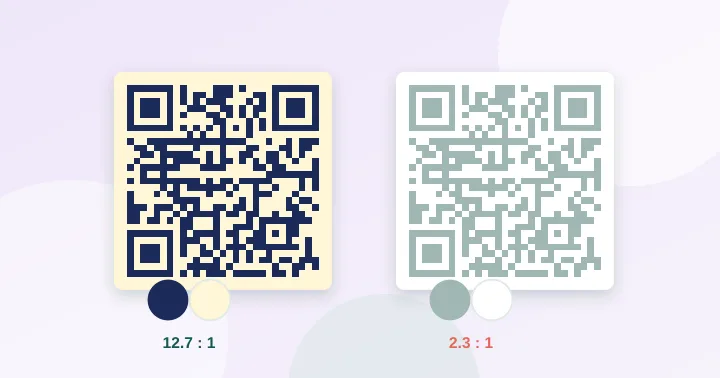
Read the guide →Brand colours are fine on a QR code, if you respect one rule: dark modules on a lighter background. How to measure it, and the cases that break.
Read the guide →A logo in the centre looks professional and can work reliably, if you keep it small, use level H, and respect the parts of the code that must stay visible.
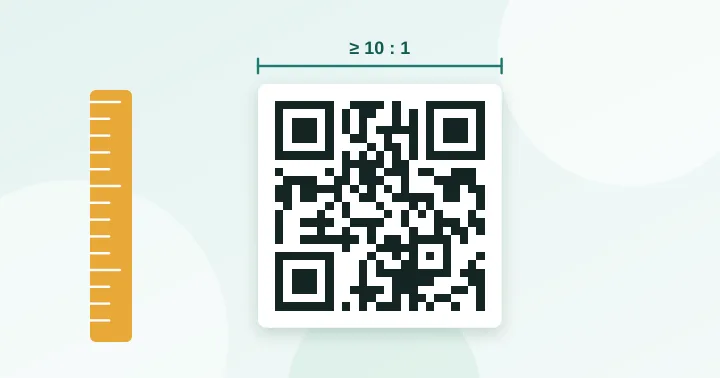
Read the guide →The 10:1 rule, how density changes the answer, and a lookup table for business cards, table tents, posters and banners.
Read the guide →Technical correctness gets the code scanned; the call to action and landing page get it used. A practical checklist for print campaigns.
Read the guide →A Wi-Fi QR code is a small text string with a fixed format. Understand the fields, the escaping rules and the security trade-offs before you print one.
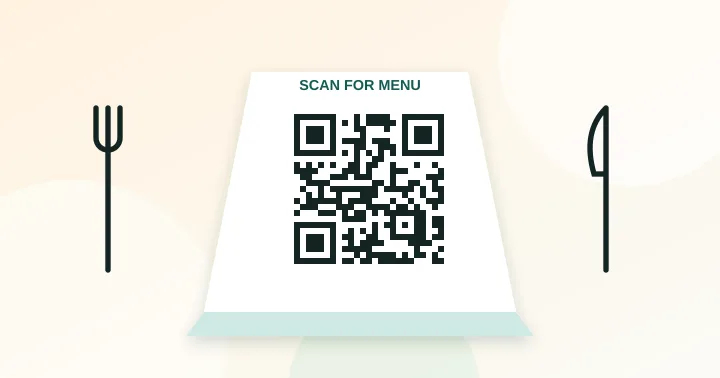
Read the guide →Where to host the menu, what size to print, how to avoid broken codes after a redesign, and why a paper menu should stay on hand.
Read the guide →Link, contact card or phone number? The right choice depends on size, density and what you want the other person to do next.
Read the guide →Registration links and ticket validation are different jobs. What a free static code can do, and what needs unique, one-time tickets.
Read the guide →You can measure QR campaigns with free analytics and a short redirect path. What it can and cannot tell you, step by step.
Read the guide →A QR code cannot infect your phone by being scanned, but it can send you to a malicious page. How the scams work and how to protect yourself and your customers.
Read the guide →Nine failures cause almost every unscannable QR code. A diagnostic checklist, ordered from most to least common.
Read the guide →A factory parts-tracking problem in 1994, a deliberate decision not to enforce a patent, and twenty-odd years before phones read codes natively.
Read the guide →